she/her
Friend of the forest
Wife, mom of two tweens
I have a neuro-sparkly brain and I have a kid who does as well
My natural habitat is to swim in my head.
Deep questions and pondering.
Sometimes around the question: what does it mean to live a life of love?
Then I discovered somatic work.
Connecting to feeling experineces was like taking my first breath of air after living a lifetime underwater.
Love became tangible.
Hi, I’m Erin
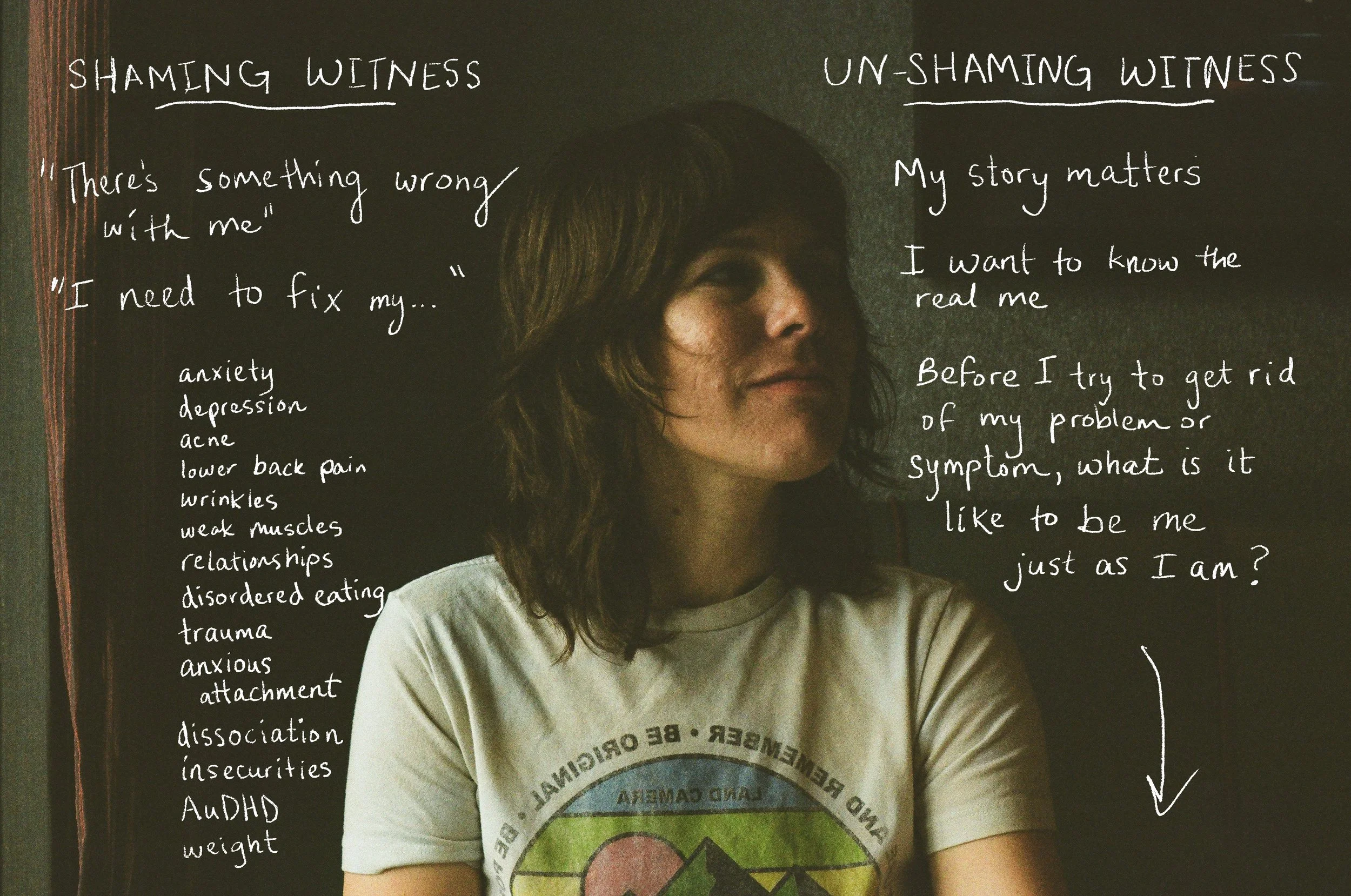
I am a certified somatic coach and unshaming practitioner.
Integrate trauma, be more yourself in relationships and feel more alive.
Here’s what’s unique about my work:
Somatic work offers an alternate way to explore your physical, relational or emotional pain.
We try to talk our way out of a problem.
We forget we also have a body that is communicating with us all the time.
We are used to body signals like hunger or needing to use the restroom (although we sometimes ignore them.)
We often don’t realize there are body cues trying to get our attention through many different sensations:
Tingling, pressure, warmth, aches…
When we are lovingly witnessed at a sensory level, the inner child feels safe to heal, the masks fall away and we are given permission to become more ourselves.
As we get to know ourselves better, connection feels easier and relationships blossom.
1.
The work I do focuses on the present experiences of your journey rather than the destination of “healed.”
If we focus only on the healing- we might miss the wisdom of your present experience to help you on the journey of discovering your life path.
If past memories or trauma come up during a session, we can visit those areas. I am trained to work with trauma at your own pace. There are also ways of resolving truama indirectly by focusing on present bodily experiences.
Some trauma work ephasizes regulating the nervous system. If the focus is only on regulation, we may miss out on understanding the present experiences of dysregulation. Fauning, fighting, fleeing, freezing, flocking—these all have important energies and intelligence to explore when we are held in a safe container and witnessed through an unshaming lens.
2.
I know how to create a safe space to explore your inner experiences.
A main aspect of safety is deep listening and watching for body cues of the person I am sitting with.
I am looking for an embodied “yes” or an embodied “no” to dermine the direction we take in a session.
This is very important to holding a safe space. It is possible to (unknowingly) re-traumatize someone if they don’t know how to read body cues for consent. It’s ok if you aren’t ready to explore sensitive topics. We can go as slow and gently as needed.
I am trained to help people work on truama by first equiping them with a sense of inner power and new perspectives before re-entering painful spaces.
Re-visting past memories or using words is not even necessary (some people don’t have specific memories). Truama can be resolved through the body using somatic and unshaming interventions.
I have a deep appreciation for diversity in thought and expression. All are welcome here. All the parts of you are welcome here.
3.
I’ve been there.
-I’ve experienced body shame from cystic acne and scarring on my face.
-I’ve navigated through painful seasons in my relationship with my partner.
-I understand the confusing process of deconstruction and religious trauma (or spiritual trauma).
-I know what it’s like to be labeled— to feel like people only see a label and don’t really see me.
-I’ve experienced the effects of complex PTSD from caring for a very colicy baby. My nervous system was frayed and on edge for years after giving birth back in 2013.
-I’ve survived the depths of depression and wanting to escape life when I was a teen and also as a post-partum mom.
-I’ve experienced a wildfire in my town and losing my home and all my possessions.
Somatic work and connecting to deep experinces within the body changed my life.
Maybe you relate to some of my story.
Or maybe your experiences are different.
You’ve tried therapy for depression or anxiety.
You’ve tried programs to heal from an eating disorder or an addiction.
Your chronic illness keeps you in a state of exhaustion and worry- wondering if you will ever feel better.
Maybe you’ve worked on your trauma for years.
You’ve tried regulating your nervous system to heal from PTSD.
Important interventions like medication and therapy can be really helpful for some people.
(I wish a pill could work for everyone).
Sometimes these interventions leave us wondering if we might be missing something.
I encourage you, don’t give up.
Try Somatic work or Unshaming work. Find a practitioner who deeply understands the effects of shame and knows how to hold a safe space for you.
I am passionate about helping you to see your own beauty, creativity and to discover the gifts you have to offer your community.
I would love to meet with you.
4.
Disclaimer: Coaching and somatic work is not a substitute for medication or psychotherapy. My work can be done alongside medication. Always talk to a doctor if you ever have medication questions or concerns.